
A sound market thesis does not make the attached order quantity safe. Approve the direction only after recalculating position size from your account risk, stop distance, current exposure, and the loss you can accept if the thesis fails.
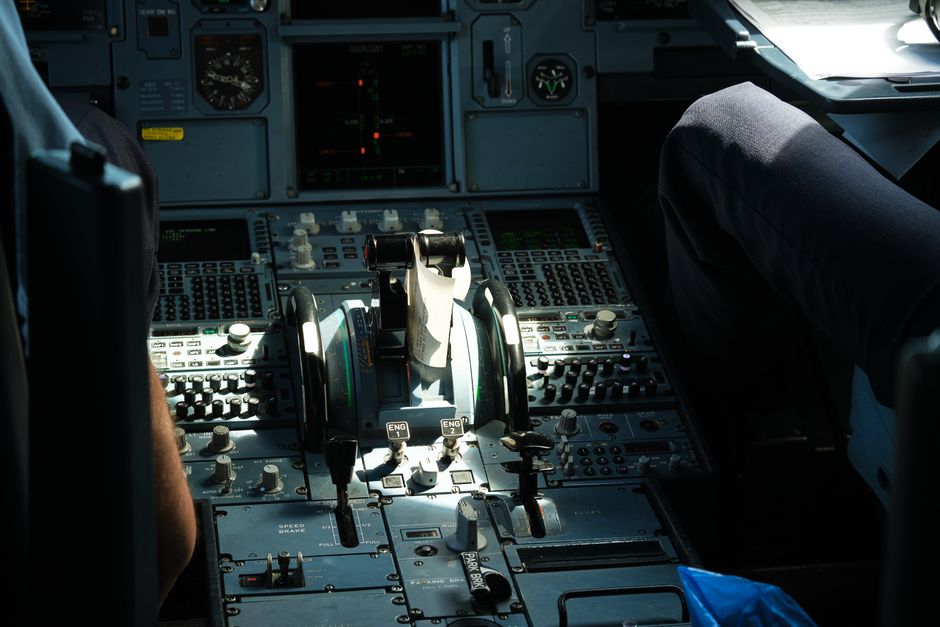
In 1983, Air Canada Flight 143 was headed from Montreal to Edmonton, with a stop in Ottawa, when both engines lost power over Manitoba. Captain Robert Pearson and First Officer Maurice Quintal had the correct destination and a capable aircraft. The fuel quantity was wrong.
The calculation that left a Boeing 767 short of fuel
Air Canada was moving to metric measurements, and the Boeing 767 was among the airline’s first aircraft to use kilograms for fuel calculations. The crew and ground staff needed to convert the fuel volume into mass before departure.
They used the wrong conversion factor. The aircraft received roughly half the fuel required for the trip.
The error stayed hidden until the fuel ran out. Pearson and Quintal then had to glide the powerless aircraft toward a former air base at Gimli, Manitoba. Pearson landed on a runway being used for motorsport activities. All aboard survived.
The conversion error and landing are documented in the Canadian Aviation Safety Board’s report on Air Canada Flight 143 and in Rick Archbold and Robert Pearson’s book, Freefall: From 41,000 Feet to Zero.
The flight’s purpose was clear. Its direction was clear. The quantity placed the entire plan at risk.
That is the connection to an AI-generated trade. The assistant can identify a plausible setup while attaching a quantity that exceeds your risk limit. Agreement with the setup does not transfer authority over size.
Position size turns an opinion into account risk
Suppose an AI queues a stock purchase at $50 with a protective exit at $48. The planned loss is $2 per share before slippage and fees.
For a $20,000 account with a 1% risk limit, the loss budget is $200. Dividing $200 by the $2 stop distance gives 100 shares. A proposed order for 300 shares would place about $600 at risk, or 3% of the account, before execution costs.
The bullish thesis may still be reasonable. The 300-share quantity conflicts with the trader’s rule.
This distinction matters because position size determines how much damage a wrong thesis can cause. Entry logic answers, “Why here?” Sizing answers, “What happens if this fails?”
A trader approving the first answer without checking the second has reviewed only part of the order.
Four checks before accepting an AI-generated quantity
Start with the loss budget. Choose the maximum amount the account may lose on the trade according to a rule set before the signal appeared. A fixed percentage can help prevent confidence, urgency, or a recent win from changing the limit.
Then examine the stop distance. A wider stop requires fewer shares or units for the same risk budget. Copying a familiar quantity onto a more volatile setup can multiply the planned loss without changing the headline thesis.
Next, include existing exposure. Three separate trades can express the same underlying bet. A crypto position, a related technology stock, and another risk-sensitive asset may all weaken together. The proposed quantity should fit the whole portfolio, rather than the empty space shown on one order ticket.
Finally, account for execution uncertainty. Stops can fill beyond their trigger price, especially during gaps or thin trading. Fees and slippage also move the realized loss away from the worksheet. The calculation is an estimate, so leaving room for error is part of the approval decision.
For a worked example of a quantity violating a stated limit, see Owen’s $4,000 order. The broader rejection criteria are covered in when a human should reject an AI trade that meets all signal rules.
Approval means editing or rejecting the proposal
An approval gate should create three valid responses: approve, resize, or reject.
Approve when both the setup and quantity fit the trading plan. Resize when the thesis remains acceptable but the proposed exposure exceeds the loss budget, ignores correlated positions, or depends on a stop that no longer matches current conditions. Reject when correcting the quantity cannot bring the trade inside the plan, or when required information is missing.
Record the proposed quantity, approved quantity, risk budget, stop distance, and reason for any change. Over time, that journal reveals whether the AI repeatedly oversizes certain asset classes, volatility regimes, or account conditions. It also separates signal quality from sizing quality.
Flight 143 did not run out of direction. It ran out of correctly measured fuel. Before approving the next queued order, recalculate the quantity independently and write the maximum planned loss beside it.
Educational content, not financial advice.
Comments
No comments yet.