
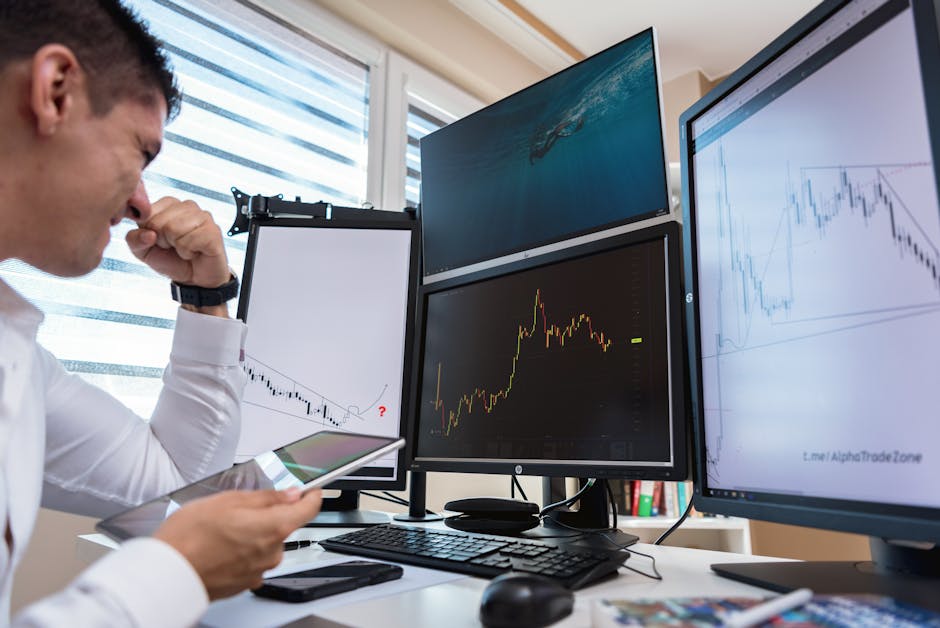
A drawdown becomes a control problem when an automated system adds exposure before you can evaluate the first loss. The key question shifts from “Was the original trade wrong?” to “Who had authority to increase risk while the diagnosis was unresolved?”
Consider an illustrative scenario. At 10:17 a.m. in Manchester, Daniel sat at his kitchen table with cold coffee beside the keyboard and watched a long position hit its stop. The loss was within his planned limit. Before he could check whether the market structure had changed, his bot opened a second long position in the same asset.
Daniel now faced two live problems. The first trade had lost money. The second suggested the system still treated the original thesis as valid.
If volatility had changed or the signal depended on stale conditions, that second entry could deepen the drawdown before Daniel understood what had happened. His planned daily loss limit was close enough that one more stop could end the session. The bot had already made the decision that mattered most: keep taking risk.
One loss can still be a normal outcome
A losing trade does not prove that a strategy has failed. Any trading method that accepts uncertainty will produce losses, including trades that followed every rule.
Suppose a trader risks 0.5% of account equity on a setup. The stop is defined before entry, the position size reflects the distance to that stop, and the trade closes as planned. That result belongs inside the strategy’s expected distribution, assuming the backtest and live record support the setup.
The correct response is diagnosis, not immediate recovery:
- Did the setup match the documented rules?
- Did market conditions change between signal generation and execution?
- Was the position sized from the stop distance?
- Is the strategy still within its maximum permitted drawdown?
- Has correlated exposure increased elsewhere in the account?
These questions take time. Even a few minutes can matter because the first loss contains new information. A system that opens another position before review removes the gap needed to interpret it.
That gap is where trading discipline lives.
The second position reveals who controls exposure
Autonomous bots often treat each valid signal as permission to execute. If the conditions remain technically true, another entry may follow, even while the trader is still examining the prior loss.
The logic can be internally consistent and still conflict with the trader’s risk policy.
Daniel’s plan allowed one attempt on that setup until he completed a post-trade review. The bot’s logic allowed another entry because the signal remained active. Both rules sounded reasonable in isolation. Together, they created an authority conflict.
This is why control should be measured by decisions, not dashboard access. A stop button gives you emergency control after execution has started. An approval gate gives you decision control before a new order reaches the market.
With an approval-gated process, the AI can generate and queue a trade signal, but the trader must approve or reject it before anything executes. The second position waits. That pause lets the trader compare the new signal with current exposure, the first loss, the daily risk limit, and the conditions that produced the setup.
The trader may still approve it. The important fact is that added exposure requires a fresh decision.
Drawdown limits need rules for re-entry
A maximum drawdown number alone cannot govern a trading system. Traders also need rules for how exposure changes while losses are accumulating.
A practical control policy can define:
- the maximum risk allowed per trade;
- the maximum combined risk across correlated positions;
- the number of attempts allowed on one setup;
- the loss level that pauses new entries;
- the evidence required before trading resumes.
For example, a trader might permit one initial position, then require manual review before any re-entry in the same asset. Another trader might pause all new positions after two consecutive strategy losses. These are illustrations, not universal thresholds. The numbers should come from account size, tested strategy behavior, and personal loss tolerance.
Position sizing belongs in the same policy. A small stop distance can produce an oversized position if the calculation is handled carelessly. The guide to how much you should risk per trade explains how to connect account risk, stop distance, and position size without treating any percentage as automatically safe.
The review record matters too. Recording why a queued trade was approved or rejected creates evidence that can be examined later. Over time, the trader can compare signals, decisions, conditions, and outcomes instead of relying on a vague memory of what “usually works.” A structured approval history can serve as the trading journal built into every decision.
Put a pause between loss and added risk
At 10:19 a.m., Daniel rejected the queued second trade. His review showed that the original setup still met its written entry rule, but his one-attempt limit had already been used. The signal was technically valid. His risk policy still said no.
He added one line to his journal: “Rejected re-entry because the first loss had not been diagnosed.”
Nothing about that decision guaranteed a better financial outcome. The market could have reversed immediately, turning the rejected trade into a hypothetical winner. Approval gates do not remove uncertainty or drawdowns. They make authority explicit before exposure increases.
Before your next session, write one rule for what must happen after a stopped trade and before another position can open. Then check whether your trading system can enforce the pause, or whether it can commit more capital while you are still deciding what the first loss meant.
Educational content, not financial advice.
Comments
No comments yet.