When you close a trading bot's dashboard for the last time, the worst part is not seeing the red number. It is realizing you have no idea which trades caused it.
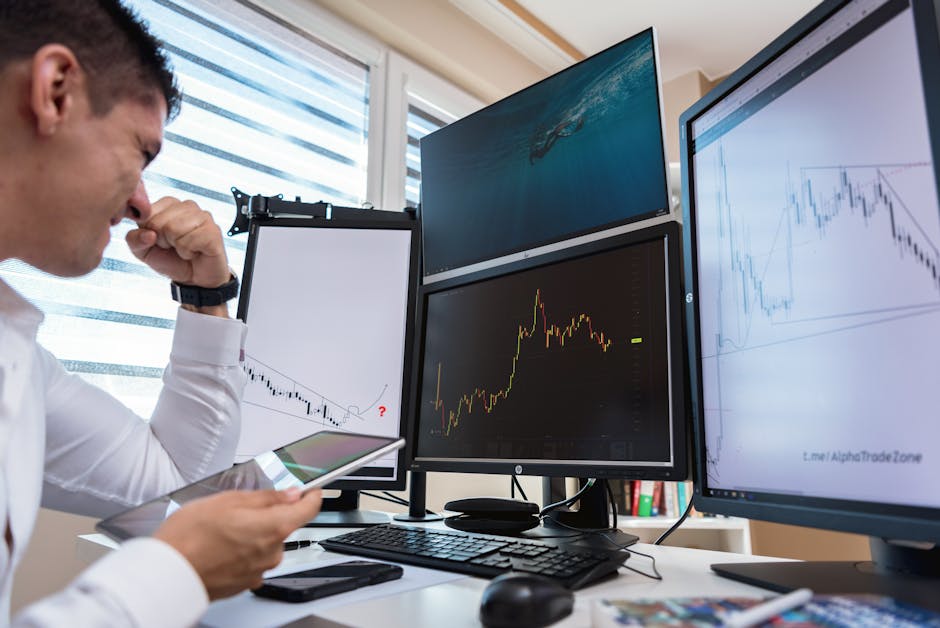
Tuesday, 3pm. I was staring at -$8,400. The bot had run for three weeks and executed 347 trades across multiple pairs and timeframes. The summary stats looked reasonable: a 62% win rate, a Sharpe ratio above 1, no single trade larger than 2% of the account. But the trade log was chaos. Seven or eight trades had losses over $200 each. Dozens had losses between $50 and $100. Some won, some lost, and the aggregate was red. I could scroll through each individual trade in the log. I could not see which decision, or which combination of decisions, had done the damage.
Was it position sizing? Was it a filter I had adjusted midway through the backtest? Was it just bad timing, or was it a fundamental flaw in the system? The dashboard could answer none of these questions. It could only show me that something had gone wrong and that I had approved the system that did it.
That question, the one the dashboard cannot answer, is what makes traders quit. It is not the money. It is the not-knowing.
When the smartest traders faced the same wall
In August 1998, John Meriwether and his team at Long-Term Capital Management were running one of the world's most sophisticated algorithmic trading systems. Meriwether had recruited two Nobel Prize winners, Myron Scholes and Robert Merton. Their model could spot microscopic pricing discrepancies across dozens of markets and execute thousands of trades to exploit them at a scale no competitor could touch.
Then Russia defaulted on its debt. Credit spreads blew out. Liquidity evaporated. Correlations the model said were stable turned out to be conditional on market conditions that no longer existed. The system began losing money.
The devastating part: they had so many open positions, layered across so many instruments and derivatives, that even the people who built the system could not see exactly where the losses were concentrating. They knew they were losing billions. They did not know why, or how much worse it could get.
For weeks in late August and early September, Meriwether and his partners stared at numbers they had built but could not read. Unlike a retail trader staring at a three-week dashboard, they stared at a multi-billion-dollar portfolio. But the psychological toll was identical: the realization that they had constructed something so layered, so interconnected, that they could no longer see inside it. Journalist Roger Lowenstein documented their experience in When Genius Failed: the more they tried to understand their portfolio, the more they realized they had never fully understood it.
When the Federal Reserve eventually coordinated a rescue in mid-September, it was not because anyone was confident LTCM would survive on its own. It was because no one could see how deep the damage might go if it collapsed. The uncertainty itself was the systemic risk. Meriwether had learned, too late, that running a system and understanding a system are not the same thing.
The dashboard only tells you who is ahead
Most traders assume a losing bot means the system is broken. Often, it means the system worked exactly as designed and the trader simply could not see what it was doing.
A bot's standard interface shows you three things: entry price, exit price, and profit or loss. That is a scoreboard. It tells you who is ahead. It does not tell you whether a loss came from bad timing, wrong position sizing, or a missed filter. Those questions matter. The dashboard cannot answer them.
Understanding is different from information. Information is numbers. Understanding is the story behind them.
What an approval gate actually changes
When you approve or reject each signal before the bot executes it, understanding moves into real time. You see the signal. You read the bot's reasoning. You decide. You act. Now, when a trade loses, you can trace it back to the specific decision you made and the specific reasoning you had for making it.
That knowledge is everything. The bot gives you the recommendation. The approval process gives you the understanding. Traders who outgrow the bot phase are not the ones who found a perfect system. They are the ones who figured out that seeing what you are doing is not optional. It is the difference between a loss and a failure.
Comments
No comments yet.