
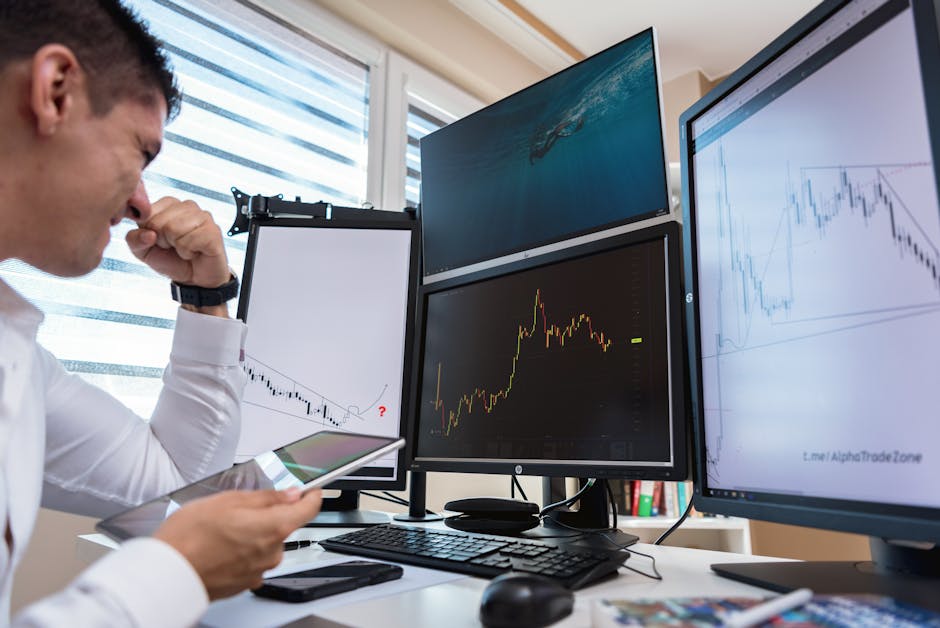
The third time you uninstall a trading bot, you're not looking for a better bot. You're looking for permission to stop believing you're the problem.
After the first failed bot, you blame the algorithm. After the second, you blame yourself for not tuning it right. By the third, you're standing in the decision again: install another one, or sit with what that string of failures actually means.
The pattern nobody names
Marcus had $48,000 when he decided to automate. He'd read enough Reddit threads about traders losing money on gut calls; it seemed obvious. Let the algorithm remove emotion. He bought a subscription to Bot A, set some thresholds, and watched the dashboard. Two weeks in, a flash crash triggered a stop-loss he'd set too tight. He lost $3,200 in fourteen minutes while he was buying coffee. He uninstalled that night.
He waited three months. Read more. Thought about what went wrong. The bot wasn't the problem, he decided; he'd just configured it badly. He switched to Bot B, a more expensive platform with better reviews. This time he studied the tuning guide. He got the parameters right. Bot B traded more carefully, which felt like progress until the market turned sideways and the bot churned his capital on micro-moves, shaving away 2% every week. After six weeks, he'd lost another $2,100. He uninstalled that one too.
By Bot C, the search was different. This time he read that the best-performing bots on backtests were the ones that ran unsupervised overnight; the thinking went that removing human hesitation removed the emotional drag that tanks returns. The bot ran while he slept. Some mornings it had made $400. Other mornings it had given back $900. After three weeks of that, he closed the positions it had opened and deleted the app.
That moment, standing in his kitchen at 6:15am with an open loss he hadn't authorized, Marcus realized he wasn't looking for Bot D. What he was looking for was a bot that would make better decisions than he could, so he could stop being the one making them.
Why the problem stays invisible
This is the move every bot sales page counts on: they frame autonomous trading as the premium version of decision-making. The pitch is that you're outsourcing to something smarter, faster, less emotional. What actually happens is you're outsourcing to something that has no context, no stakes, and no idea why you set your account size to begin with.
The first two failures feel like equipment problems because the emotional relief of watching a bot trade is real. You're no longer staring at the charts. You're no longer refreshing the news. A bad execution or a parameter you set wrong feels fixable. Install the next bot, read the next guide, tune it tighter. The pattern stays invisible because each failure points outward.
By the third, it stops pointing outward. It points at what you've been avoiding: you haven't actually decided what risk looks like for you, and no algorithm will replace that decision. A bot can't know if a 12% drawdown breaks your sleep or your finances. It can't know if you're trading $48K because you have it to lose or because you need it to grow. It can't ask. It just trades.
The moment the pattern breaks
The shift doesn't come from a better bot. It comes from adding one thing between you and the trade: you have to explicitly approve or reject each signal before it executes. The bot still generates ideas. You still make the final call.
This sounds like it defeats the purpose of automation. What it actually does is move the work from "tune the parameters right" to "understand the reasoning." When you have to consciously approve or reject a signal, you're forced to know why you're trading. Not in theory. In that moment, with that specific position size, on that specific chart. The bot generates the idea; you generate the discipline.
Marcus tried this differently the next time. A signal came through; he looked at it. The setup made sense on the timeframe, but his account had already taken a $1,800 loss that week. He rejected it. Five minutes later, the signal would have turned profitable. He rejected it anyway. Why. Because approving it would have meant risking another grand on a week that was already down. That's the decision the bot couldn't make. That's the one that keeps you solvent.
What you're actually building
When you stop hunting for the autonomous bot that will work, you start building something else: a record of your actual reasoning. Each signal you approve or reject teaches you something about what risk looks like to you in practice, not in theory. After a month of approvals and rejections, patterns emerge. Which setups you trust. Which you hesitate on. Whether you trade differently after a win or a loss. Which account conditions make you hold back.
Your approval and rejection history becomes your trading journal, built into every choice as you make it. Marcus looked back at his approvals and rejections after six weeks. He'd rejected sixteen signals that would have lost money. He'd approved twenty-three that made money. He'd also rejected four that would have been winners, and that mattered; he could see exactly what made him cautious in those moments. An open position, a bad week, a signal that didn't quite match his intuition. None of that is information a bot can use. All of it is information you need to stay solvent.
Marcus didn't install a fourth bot. He started looking at his rejections as carefully as his approvals. That's where the learning was. The signal he turned down, the loss he avoided, the pattern he couldn't have seen without explicit decisions. After three failed bots, he finally understood: automation can't replace judgment. It can only make your judgment visible enough that you can actually use it.
---
Comments
No comments yet.