
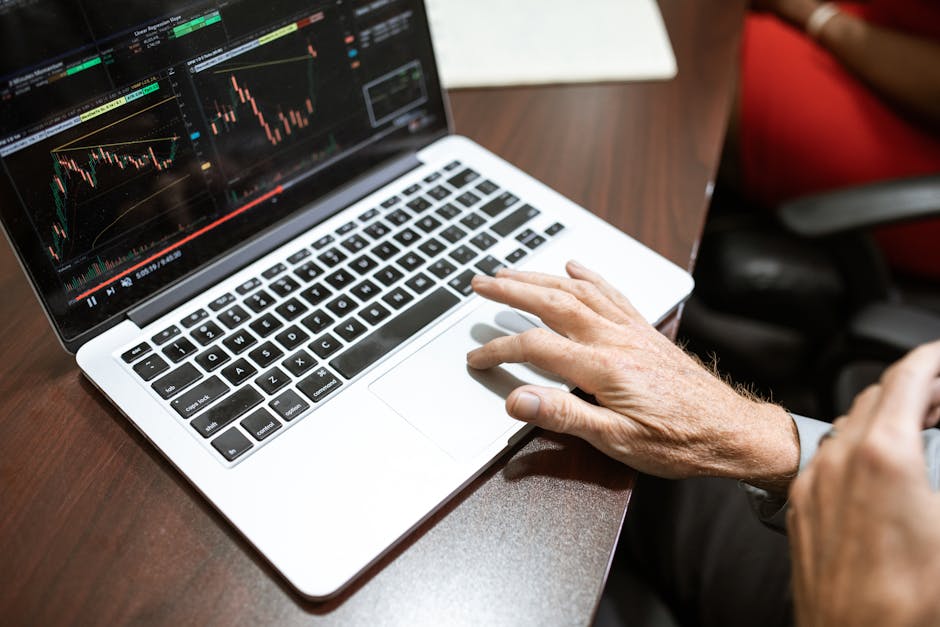
Position sizing in frontier markets is about forcing yourself to take smaller positions than your emotions want, because fast-growing opportunities tend to move fast in both directions: the upside that keeps you awake at night is built on the same volatility that could erase your capital if you're wrong. The discipline to size a position by risk, not by potential gain, is the only brake that stops FOMO from becoming a permanent loss.
Most traders discover this backwards. Yuki was three months into tracking emerging market opportunities on her watchlist, mostly Indian small-caps and some Southeast Asian tech plays. The companies were real, the growth was there, and every earnings call seemed to confirm the thesis. By July, she'd found what looked like the clearest signal yet: a mid-cap fintech in Manila that had just crossed profitability. The stock jumped 12% on the news. She opened her trading app at 9:30 AM to queue a signal for a position, and her mind went to a familiar place: what if this runs to 30% like the last three plays? What if she waited and it was gone?
She sized the position at 8% of her total capital. In the moment, it felt conservative; the opportunity felt too clear to play it smaller. Two weeks later, a regulatory announcement hit. Nothing catastrophic, just some clarity around lending restrictions. The stock fell 28%.
That 8% position became 6% of her capital. It wasn't a wipeout, but it was real money gone, and worse, it was the kind of real money that made the next decision harder. She was down, frustrated, and now every similar setup looked riskier, even the ones that had better fundamentals.
What Yuki discovered after that drawdown is that frontier markets don't actually need you to be wrong very often to cost you everything. They just need you to be a little bit wrong at the scale you're trading. A 28% drawdown on an 8% position is a 2.2% hit to total capital. That's recoverable. But if her position had been 15%, that same move takes 4.2% out and creates psychological pressure that makes the recovery harder. At 25%, she's looking at a drawdown that erases months of gains and leaves her either paralyzed or revenge-trading into the next loss.
Why frontier markets feel different
Emerging markets and small-cap crypto plays move on information that moves slowly to retail. You'll see a catalyst, you'll think clearly about why it matters, and then you'll feel the gap between what you know and what everyone else knows yet. That gap creates urgency. It feels like you're ahead of the crowd, and the crowd is coming. If you don't size for your risk tolerance and your actual conviction, you're sizing for fear. Fear is a terrible position-sizing philosophy.
The other piece is velocity. A 12% gap up is normal in these markets. A 40% drop on unexpected news is also normal. Positions that feel safe based on daily moves in the S&P 500 become untenable when the asset you're holding moves 30% on a single headline. Position size has to account for that volatility, which means it needs to be much smaller than it feels like it should be.
How to actually size: risk first, not upside first
Start with the question Yuki wasn't asking: if I'm wrong, how much can I afford to lose on this single position? Not the upside, just the actual loss.
Take that number and divide it by the points or percentage you're genuinely uncertain about. If you think the Manila fintech holds above its 50-day average with 60% confidence, your risk is the distance to that level. If that's 8% down and you can lose $200 on this trade, you're risking $200 divided by 0.08, which gives you the position size.
That math forces you to answer what you actually believe. If it tells you to risk 0.5% of your capital, that's what the odds say. It won't feel like enough when the stock jumps 25%. That feeling is exactly why the math works.
The approval gate as a pressure check
Queuing a signal to wait for approval before it executes does something psychology-forward: it puts space between the feeling and the action. Yuki saw the fintech jump and immediately felt the urgency. Queuing the signal, sizing it by risk, and waiting for her own approval forced her to spend five minutes writing down the thesis again. Could she write it down with the same clarity? Or was the urgency doing the thinking?
Discipline is picking a size and defending it when the market is moving and your conviction is higher than the math says it should be.
Comments
No comments yet.