
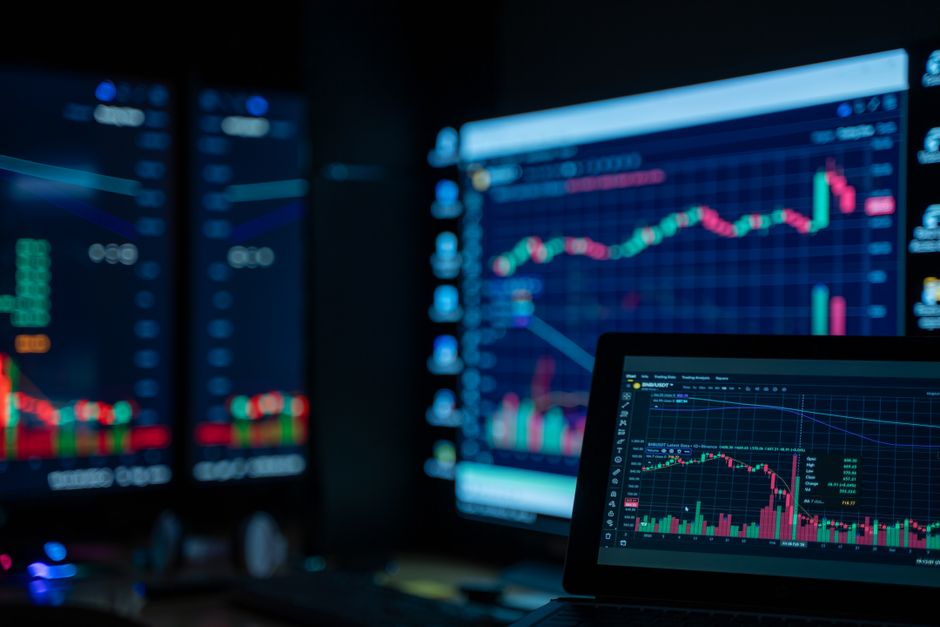
An unexpected geopolitical event is a reason to pause any queued trade whose assumptions depend on normal liquidity, stable correlations, or orderly price discovery. A backtest measures how a strategy behaved in recorded conditions; it cannot confirm that the same relationships still hold after a sudden shock.
Consider an illustrative composite. At 6:42 a.m. in Chicago, Mara was standing at her kitchen counter with cold coffee beside her laptop. A queued crypto trade met every rule she had tested: entry confirmed, position size calculated, stop defined.
Then an alert reported an unforeseen international escalation.
Prices moved before the details became clear. The spread widened. Assets that had behaved differently during her test period began falling together. Her signal still showed “approve” because its inputs described price behavior, not the political event changing that behavior.
Mara had nine minutes before her planned entry window closed. Approving would preserve the setup. Pausing could mean watching the market move without her.
The trade might work. That was precisely the problem.
A valid signal can depend on invalid assumptions
A backtest answers a narrow question: how would these rules have performed across a particular set of historical data, including its spreads, volatility, correlations, and market reactions?
A geopolitical shock can alter several of those conditions at once.
Liquidity may thin as traders pull orders. Spreads may expand beyond the levels used in the test. Correlations can rise as participants reduce risk across several markets together. Price can gap through an intended entry or stop. News may also develop faster than the strategy’s data can represent it.
The signal has not necessarily malfunctioned. It may be applying its rules correctly to a market that no longer resembles the conditions behind those rules.
This distinction matters. A 62 percent historical win rate, for example, says nothing reliable about one trade placed during a new event regime. That figure describes a sample. It does not remove uncertainty from the next decision.
The useful question changes from “Does the setup pass?” to “Are the setup’s operating assumptions still present?”
Define the pause signal before the alert arrives
Discipline becomes harder when the chart is moving and the news is incomplete. A written pause rule gives you something firmer than instinct.
Your rule might require manual review when:
- A new geopolitical event directly involves a country, commodity, currency, industry, or supply route connected to the trade.
- The current spread exceeds the maximum recorded in the trading plan.
- Volatility moves outside the range covered by the backtest.
- Several supposedly diversified positions begin moving together.
- The planned order would execute before you can verify the event’s basic facts.
- Your original invalidation condition no longer captures the main risk.
Each trigger should lead to a defined action: cancel the queued order, reduce the proposed size, wait for a fresh evaluation window, or reject the trade. “Be careful” gives you no decision rule.
This is where approval gated trading earns its place. The AI can generate and queue a signal, but the human retains the final decision before a real order executes. The gate creates a deliberate interruption between a historical pattern and current market risk.
That interruption also helps with a quieter danger: urgency. When a trade window is closing, rejecting a valid looking setup can feel like losing an opportunity. In reality, the trader is declining exposure whose risk can no longer be estimated from the original evidence.
Recheck the variables the backtest assumed
Mara did not try to predict the geopolitical outcome. She reviewed the trade’s dependencies.
Her planned loss was based on an entry near the quoted price and an exit near the stop. The wider spread weakened the first assumption. Fast price movement weakened the second. The position also overlapped with another holding that had started moving in the same direction, increasing concentration at the moment diversification mattered most.
With four minutes left, she rejected the queued trade.
The market rose briefly after her planned entry, then reversed. That path does not prove the rejection was correct. A disciplined decision cannot be judged solely by the next candle. The decision was sound because the evidence supporting the original risk estimate had changed before execution.
The same principle appears in why Daniel rejected a queued trade after the market changed. A rule following signal can remain technically valid while the decision around it requires fresh judgment. Reviewing what specific observation would prove your trade setup wrong can help turn that judgment into a repeatable process.
Record the rejection with the same care as a trade
A pause should leave evidence. Record the event, the queued setup, the assumptions that changed, and the decision taken. Avoid rewriting the reason after seeing what price did next.
Useful journal entries are plain:
“Rejected because spread exceeded the tested range.”
“Paused because two positions became more correlated after the news.”
“Cancelled because the proposed stop no longer bounded the likely loss.”
Later, review whether the trigger was specific enough and whether similar events exposed the same weakness in the strategy. A series of rejections may reveal that the backtest needs event filters, wider cost assumptions, or a separate test for stressed periods.
At 7:15 a.m., Mara closed the alert feed and added one sentence to her checklist: “If the market’s operating conditions change before entry, rerun the risk decision.” No prediction. No claim that pausing always saves money. Just a boundary written before the next urgent decision.
Educational content, not financial advice.
Comments
No comments yet.